

Laminated glass is a safety glazing made by bonding two or more glass layers with a strong interlayer, such as PVB. When it breaks, the interlayer holds the pieces together instead of letting them scatter.
This simple design makes laminated safety glass a practical choice for windows, doors, skylights, glass railings, and other architectural glazing systems. It can also provide added benefits, including impact resistance, UV protection, sound reduction, and security. Understanding how laminated glass works can help you choose the right glass for a safer building.
What Is Laminated Glass?
Laminated glass is a type of safety glazing made by bonding two or more glass layers around a strong plastic interlayer. The most common interlayer is PVB (polyvinyl butyral). This layer helps keep the glass together if it breaks.
Unlike ordinary glass, laminated glass is designed to stay attached to its interlayer after impact. The glass can still crack or break, but the broken pieces are less likely to fall away from the panel. This makes laminated safety glass useful in places where broken glass could cause injury or create another safety problem.
Laminated glass is widely used in windows, doors, skylights, glass railings, balconies, storefronts, and other architectural glazing systems. It can also be designed for specific needs, such as sound reduction, UV protection, impact resistance, or security.
- The basic idea is simple: the glass provides strength and visibility, while the interlayer helps hold the system together when the glass is damaged.
How Is Laminated Glass Made?
The manufacturing process starts with two or more sheets of glass. A thin glass interlayer, such as PVB or another suitable material, is placed between the glass layers.
These layers are then bonded together using controlled heat and pressure. The process creates a single laminated glass unit rather than separate sheets.
The type and thickness of the glass can vary by project. You can also select the interlayer based on the required performance. For example, some laminated glazing systems are designed with stronger impact resistance, while others focus more on acoustic performance or security.
This flexibility makes laminated glass suitable for both residential and commercial buildings.
How Does the Interlayer Hold Broken Glass Together?
The main safety advantage of laminated glass comes from its interlayer.
If an ordinary glass panel breaks, the pieces can separate from the frame and fall. With laminated glass, the broken pieces can remain bonded to the interlayer. This helps reduce glass fallout and keeps the damaged panel more contained.
That does not mean laminated glass cannot break. It can still crack or fracture after a strong impact. The difference is what happens afterward.
For applications such as glass railings, skylights, doors, and overhead glazing, keeping broken glass retained can be an important part of the overall safety design.
This is why laminated safety glass is often considered when glass retention and injury protection are important requirements.
How Is Laminated Glass Made?
Laminated glass may look like a single sheet. In reality, it has several layers. These layers work together to improve safety and performance.
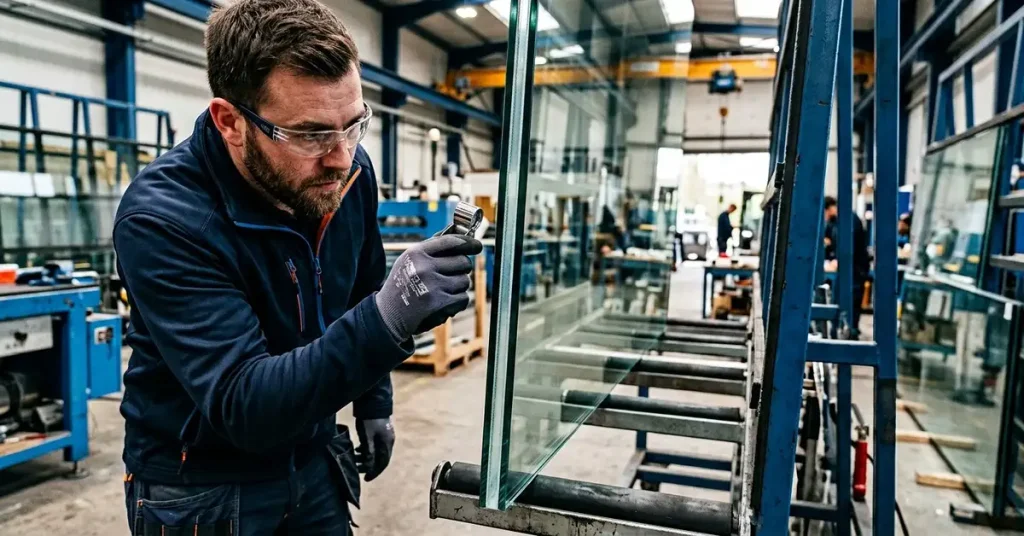
The process starts with two or more sheets of glass. A thin glass interlayer is placed between them. PVB (polyvinyl butyral) is one of the most common interlayer materials used in laminated safety glass.
How the Glass Layers Are Bonded
First, workers carefully clean the glass sheets. Then they place the interlayer between the sheets. Workers line up the glass and interlayer to form one unit.
Next, heat and pressure bond the layers together. This removes trapped air and helps create a strong connection between the glass and interlayer.
After bonding, the finished panel acts as a single piece of laminated glazing. These choices depend on the project’s needs.
For example, a large glass railing may need different specifications than a residential window. A skylight may also have different safety requirements.
What Happens When Laminated Glass Breaks?
The interlayer is key to the safety design. If the glass is hit hard enough to break, the glass can crack or fracture. However, the broken pieces can remain attached to the interlayer.
This helps reduce glass fallout and limits the spread of broken glass. It can also help improve safety in areas where people are close to the glass.
That is why laminated glass is used in windows, doors, skylights, glass railings, and other architectural glazing systems. Its layered construction provides a useful combination of visibility, strength, and glass retention.
Why Is Laminated Glass Safer?
Laminated glass is mainly used for safety because it can help keep broken glass together. This matters in places where people are close to windows, doors, railings, or other glass panels.
A strong impact can still crack laminated glass. However, the glass interlayer helps hold many broken pieces in place. This can reduce the chance of sharp pieces scattering across the area.
It Helps Hold Broken Glass in Place
The biggest safety benefit comes from the interlayer. In many laminated safety glass products, PVB (polyvinyl butyral) bonds the glass layers together.
If the glass breaks, the interlayer can keep the fragments attached. The damaged panel may remain in its frame for some time. This depends on the glass type, impact, framing system, and installation.
This feature is useful for windows, doors, glass railings, and skylights. It is especially important where falling or scattered glass could hurt someone.
It Can Reduce Glass Fallout
Broken glass can become dangerous when pieces fall from a height. This can be a concern with overhead glazing, balconies, and glass guard systems.
Laminated glazing helps address this risk by retaining broken glass within the panel. It does not make the glass unbreakable. Instead, it changes how the glass behaves after damage.
It Offers More Than Basic Safety
Laminated glass can also provide other useful performance benefits. Depending on its construction, it may offer impact resistance, sound reduction, UV protection, and security benefits. The right specification depends on the building and its needs.
For this reason, people often choose laminated glass when both clear visibility and improved glass retention matter.
Where Is Laminated Glass Used?
Laminated glass is used in many parts of modern buildings. It is especially useful where safety glazing is important. Its layered design helps keep broken glass attached to the interlayer.
You can find laminated glass in homes, offices, shops, hotels, and other commercial buildings. The right type depends on the location and the project’s safety needs.
Laminated Glass for Doors and Windows
Windows and doors are common uses for laminated safety glass. People often come close to these surfaces. Accidental impacts can happen at any time.
If the glass breaks, the PVB interlayer can help hold the broken pieces together. This can reduce glass fallout and help limit the spread of sharp fragments.
Laminated glass can also be used in large windows and storefronts. The final specification should match the size, frame, and building requirements.
Laminated Glass for Railings and Balconies
Glass railings and balconies need careful attention to safety. A broken panel can create a serious fall hazard.
Laminated glazing can help keep broken glass retained within the system. This is one reason it is used for glass railings, balustrades, and balcony glazing.
The glass must still be properly designed and installed. The glass type, thickness, interlayer, fittings, and support system all matter.
Laminated Glass for Skylights and Overhead Glazing
Skylights and overhead glazing have an added safety concern. Broken glass can fall onto people below.
Laminated glass can help reduce this risk by keeping broken pieces attached to the interlayer. This makes it a useful option for certain skylights and overhead glazing systems.
For any project, the final glass specification should follow applicable building codes and safety glazing requirements.
Laminated Glass vs. Tempered Glass
Laminated glass and tempered glass are both safety glass options. However, they behave differently when they break.
The main difference is simple. Laminated glass uses an interlayer to help hold broken pieces together. Tempered glass is heat-treated to increase its strength and changes into smaller pieces when it breaks.
How Tempered Glass Breaks
Manufacturers heat tempered glass and then cool it quickly. This process makes it stronger than ordinary annealed glass.
When tempered glass breaks, it usually breaks into many smaller pieces. These pieces are generally less like large, sharp shards.
However, the pieces can still leave the frame. This differs from laminated glazing.
How Laminated Glass Breaks
Laminated glass contains an interlayer, such as PVB (polyvinyl butyral). When the glass breaks, the interlayer can help keep the broken pieces attached.
This can help reduce glass fallout. It can also provide better glass retention in applications where broken glass must stay in place.
For this reason, laminated safety glass is often considered for glass railings, skylights, windows, doors, and overhead glazing.
Can You Combine Laminated and Tempered Glass?
Yes. A laminated glass unit can use tempered glass as its glass layers.
This combination can provide greater strength and better breakage retention. It can be useful for demanding architectural glazing applications.
The right choice depends on the project. Consider panel size, wind loads, impact requirements, framing, and local building codes.
Neither glass type is automatically right for every application. A qualified glazing professional can help select the appropriate system for the building.
What Are the Benefits of Laminated Glass for Buildings?
Laminated glass does more than improve basic glass safety. Its layered construction can provide several useful benefits for homes, offices, shops, and other buildings.
You can select the right combination of glass and interlayer based on the project’s needs. This makes laminated glazing a flexible option for many architectural glass applications.

Improved Safety and Glass Retention
The main benefit is glass retention. When laminated glass breaks, its PVB interlayer can help hold the broken pieces together.
This can reduce the amount of broken glass that falls away from the frame. It can also help limit the spread of sharp fragments.
This feature is useful for windows, doors, glass railings, balconies, and skylights. The exact safety performance depends on the complete glazing system.
Sound Reduction
Laminated glass can also help reduce outside noise. The interlayer can improve the acoustic performance of suitable glazing systems.
This can be useful near busy roads, commercial areas, airports, or other noisy locations.
It is not a complete soundproofing solution. Window frames, wall construction, gaps, and installation also affect noise levels.
UV Protection
Some laminated glass products can reduce the amount of ultraviolet (UV) radiation passing through the glass.
This can help protect furniture, flooring, fabrics, artwork, and other interior materials from UV-related fading.
The level of protection depends on the glass and interlayer used.
Added Security
Laminated glass can also provide an extra layer of protection against certain impacts and forced-entry attempts.
The interlayer can make it harder for broken glass to separate completely. However, security performance depends on the complete system and its tested specification.
For this reason, laminated glass can be useful when a building needs a combination of safety, security, sound reduction, and clear visibility.
How to Choose the Right Laminated Glass
Choosing laminated glass is not just about picking the thickest panel. The right option depends on where the glass will be used and what it needs to handle.
A window may need a different specification than a glass railing or skylight. Size, location, loading, framing, and safety requirements all matter.
Consider Glass Thickness and Size
Start with the glass panel’s size and purpose. Larger panels may need a different glass thickness or construction than smaller ones.
The building location also matters. Wind loads and other design forces can affect the glass specification.
For architectural glazing, select glass based on the project’s actual requirements. A qualified glazing professional can calculate the appropriate thickness and configuration.
Choose the Right Interlayer
The glass interlayer is an important part of laminated glass. PVB is widely used, but other interlayer materials are also available.
Different interlayers can provide different performance characteristics. Some may focus more on safety and glass retention. Others can offer improved acoustic, UV, or structural performance.
The best choice depends on the application. It should match the required performance, not just the lowest cost.
Check Safety and Building Standards
Always consider safety standards before selecting laminated safety glass.
Standards such as ANSI Z97.1 and CPSC 16 CFR 1201 cover safety glazing performance in relevant applications. Building codes may also require specific locations and glass types.
Finally, consider the complete glazing system. The glass, interlayer, frame, hardware, and installation all work together. Proper specification and professional installation are essential for the expected performance of laminated glass.
Frequently Asked Questions About Laminated Glass
What is laminated glass?
Laminated glass is safety glazing made by bonding two or more glass layers with an interlayer, such as PVB. The interlayer helps hold broken glass together.
Why is laminated glass safer?
Laminated glass can help keep broken glass attached to its interlayer after impact. This can reduce glass fallout and limit the spread of broken pieces.
Is laminated glass stronger than tempered glass?
They provide different types of performance. Tempered glass is heat-treated for increased strength, while laminated glass uses an interlayer to help hold broken glass in place. The right choice depends on the application.
Where is laminated glass commonly used?
Laminated glass is commonly used for windows, doors, skylights, glass railings, balconies, storefronts, and other architectural glazing systems.
Does laminated glass provide benefits besides safety?
Yes. Depending on the glass and interlayer, laminated glazing can provide sound reduction, UV protection, impact resistance, and added security.